
Why Are Our Preschoolers Polishing Rocks?
Most of our students will probably never need to know how to turn a piece of soapstone into a jewelry-quality pendant.
So why do we teach them how?
Because learning to polish a stone isn’t really about polishing a stone.
By: Daniel Olsen / Date: September 27, 2026
What happens to a child’s developing mind, body, and sense of self when we repeatedly give them opportunities to do real things that matter?
That question is at the heart of Practical Life at Starry Garden.
Practical Life is one of the foundational areas of Montessori education. In a Montessori classroom, young children may pour water, prepare food, sweep, wash, polish, arrange flowers, care for plants and animals, and learn to care for themselves and their environment.
At first glance, these activities can look surprisingly ordinary. Why spend valuable classroom time teaching a three-year-old to pour water or polish something?
Because learning to pour water isn’t really just about pouring water.
Dr. Maria Montessori recognized that purposeful activity gives young children opportunities to develop
concentration, coordination, independence, order, controlled movement, sequencing, problem-solving and confidence. Practical Life also provides important indirect preparation for later learning. Long before children encounter many ideas in reading, writing, mathematics and science as abstractions, they can begin developing the physical, cognitive and attentional abilities those subjects will eventually require.
The activity is important. But what is happening inside the child may be even more important.
At Starry Garden, we have intentionally taken that idea beyond the Practical Life shelves and woven it throughout the children’s environment.
Credit: Daniel Olsen
Credit: Daniel Olsen
Credit: Daniel Olsen
Real work for small hands
In our classroom, children have access to many of the traditional Montessori Practical Life materials. But they also encounter opportunities to participate in the actual work happening around them.
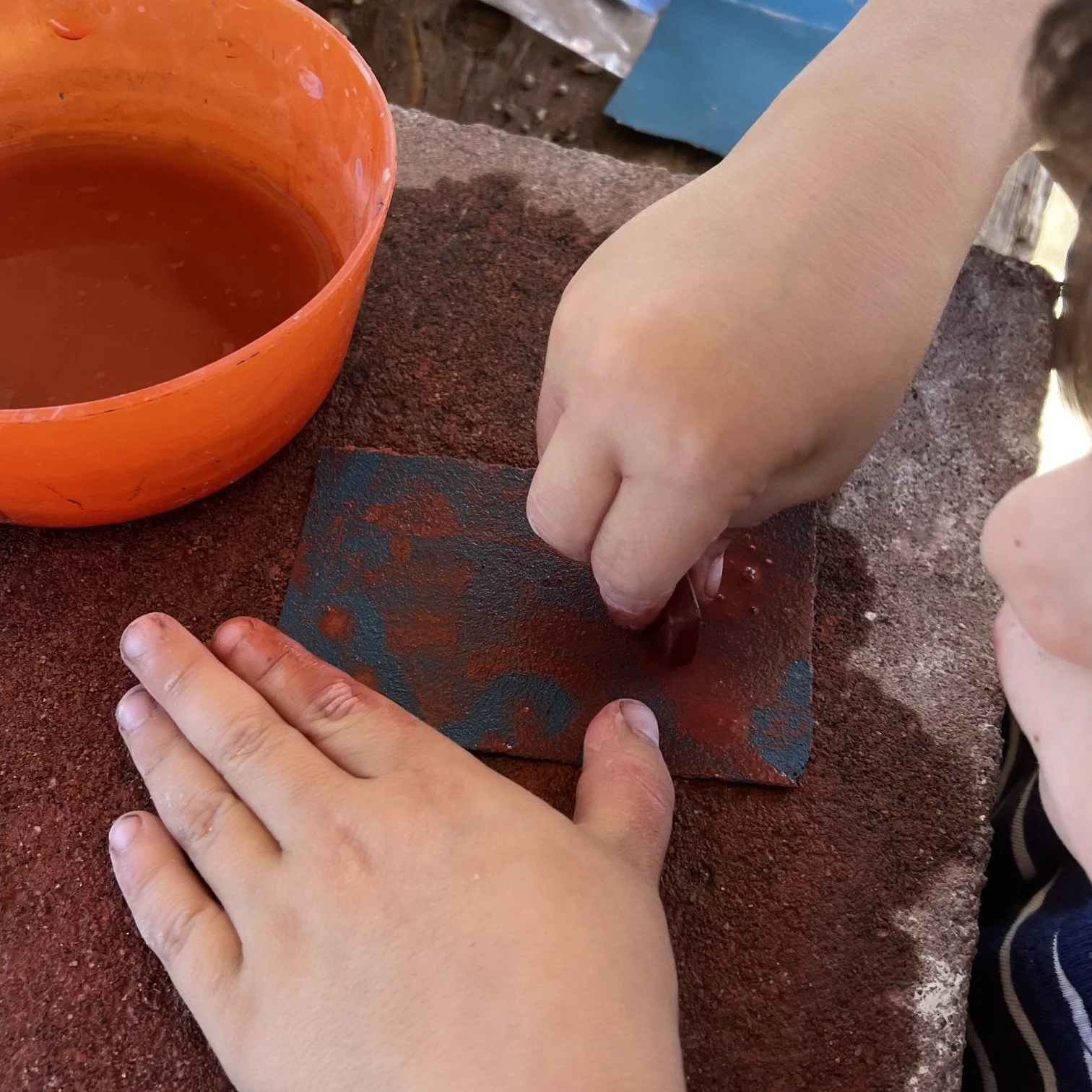
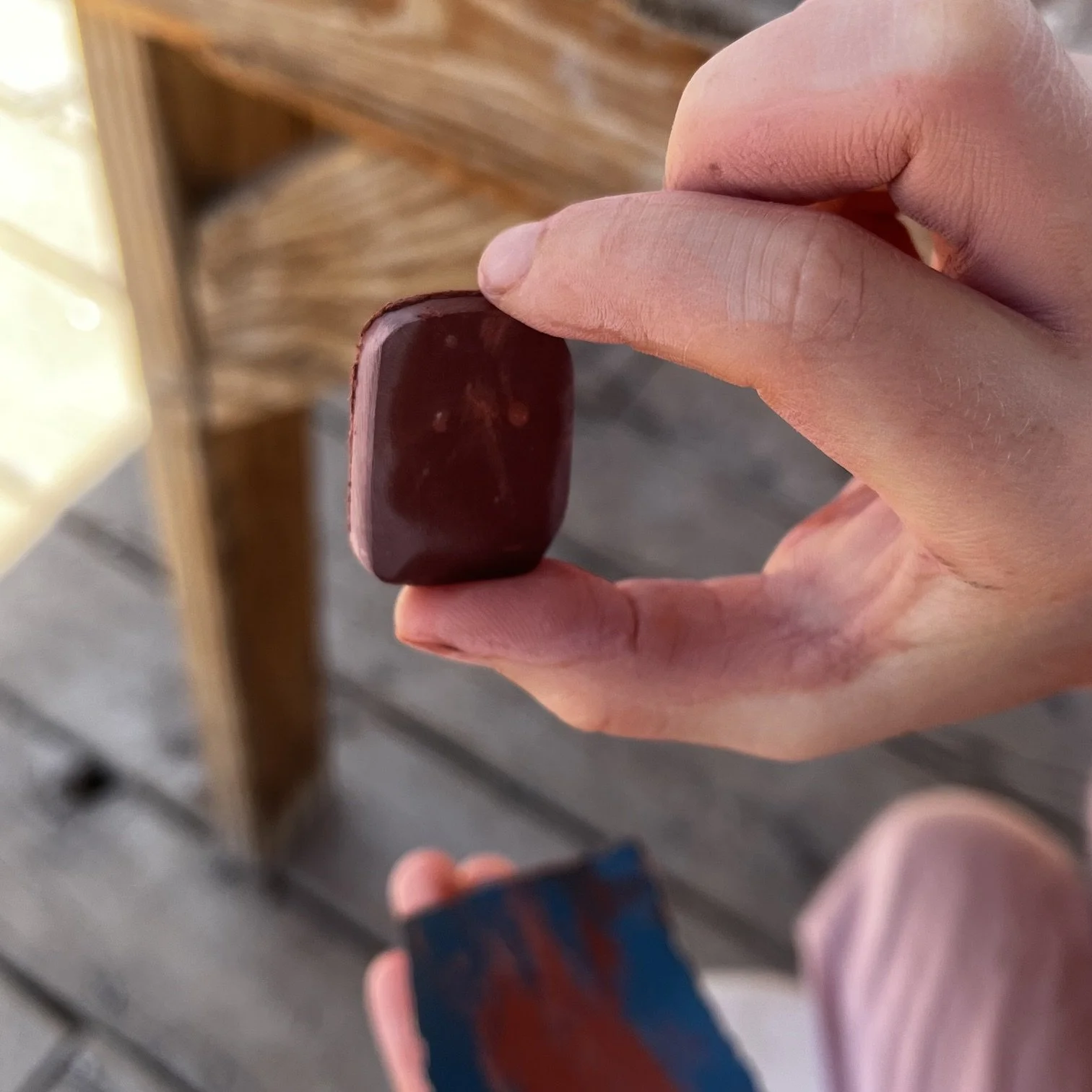
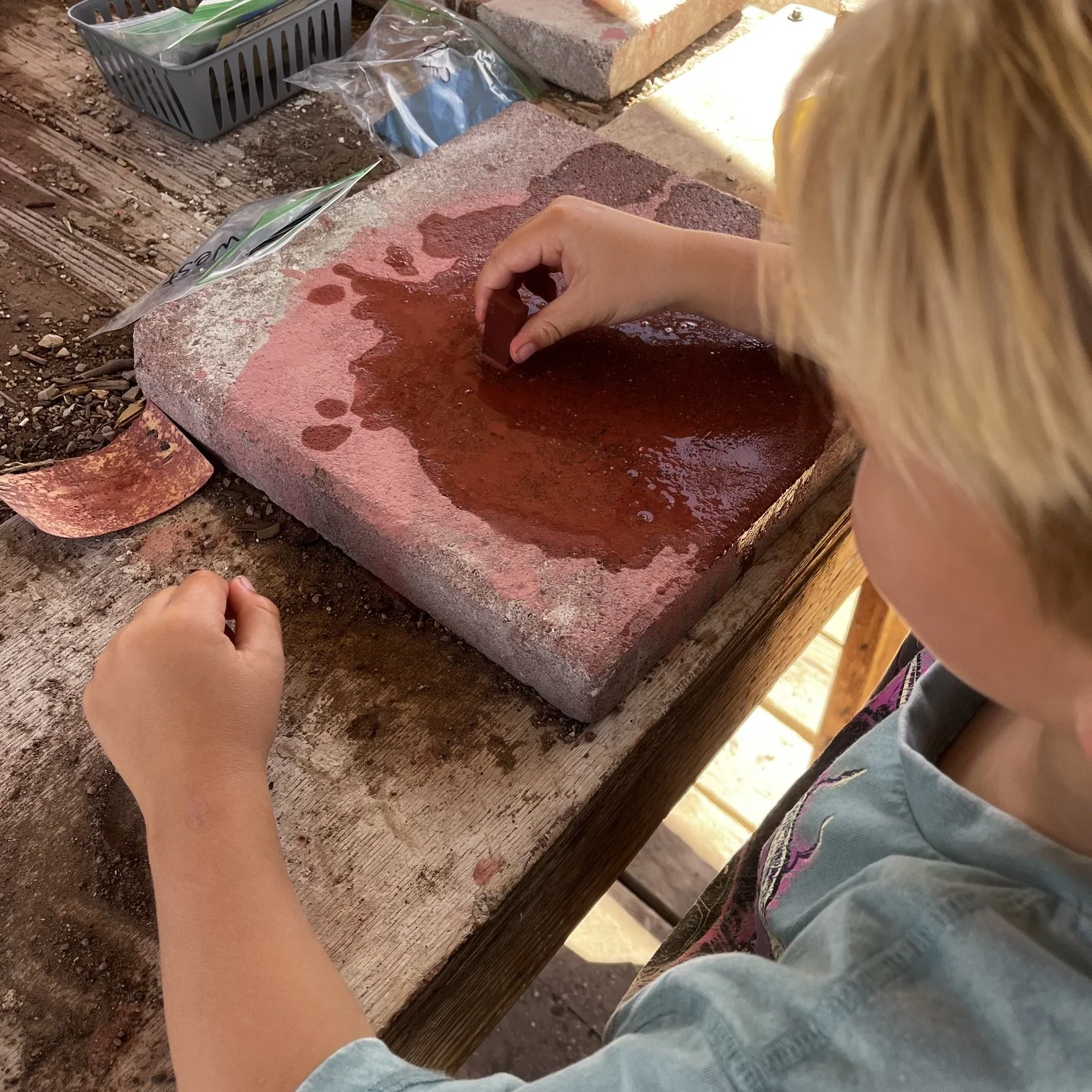
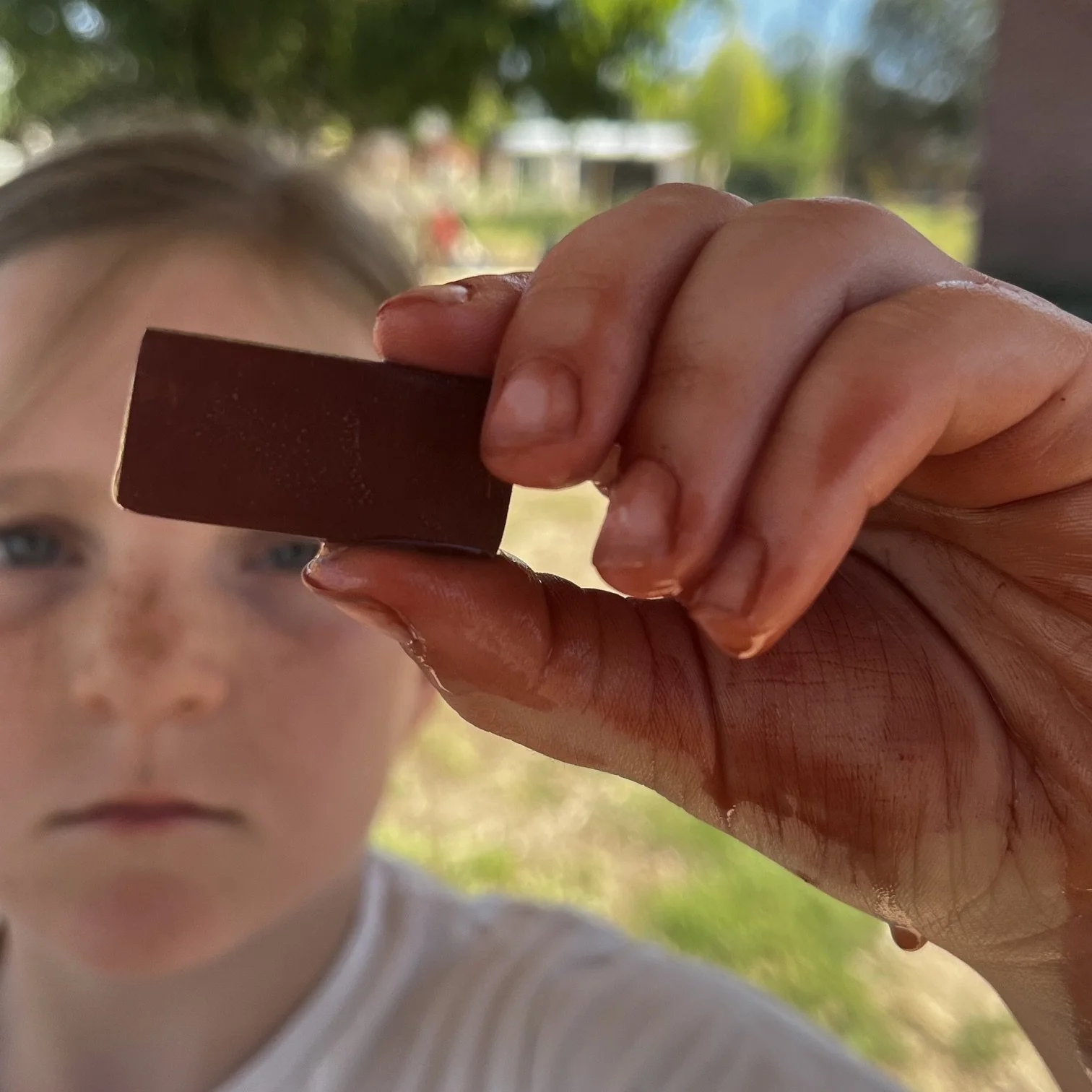
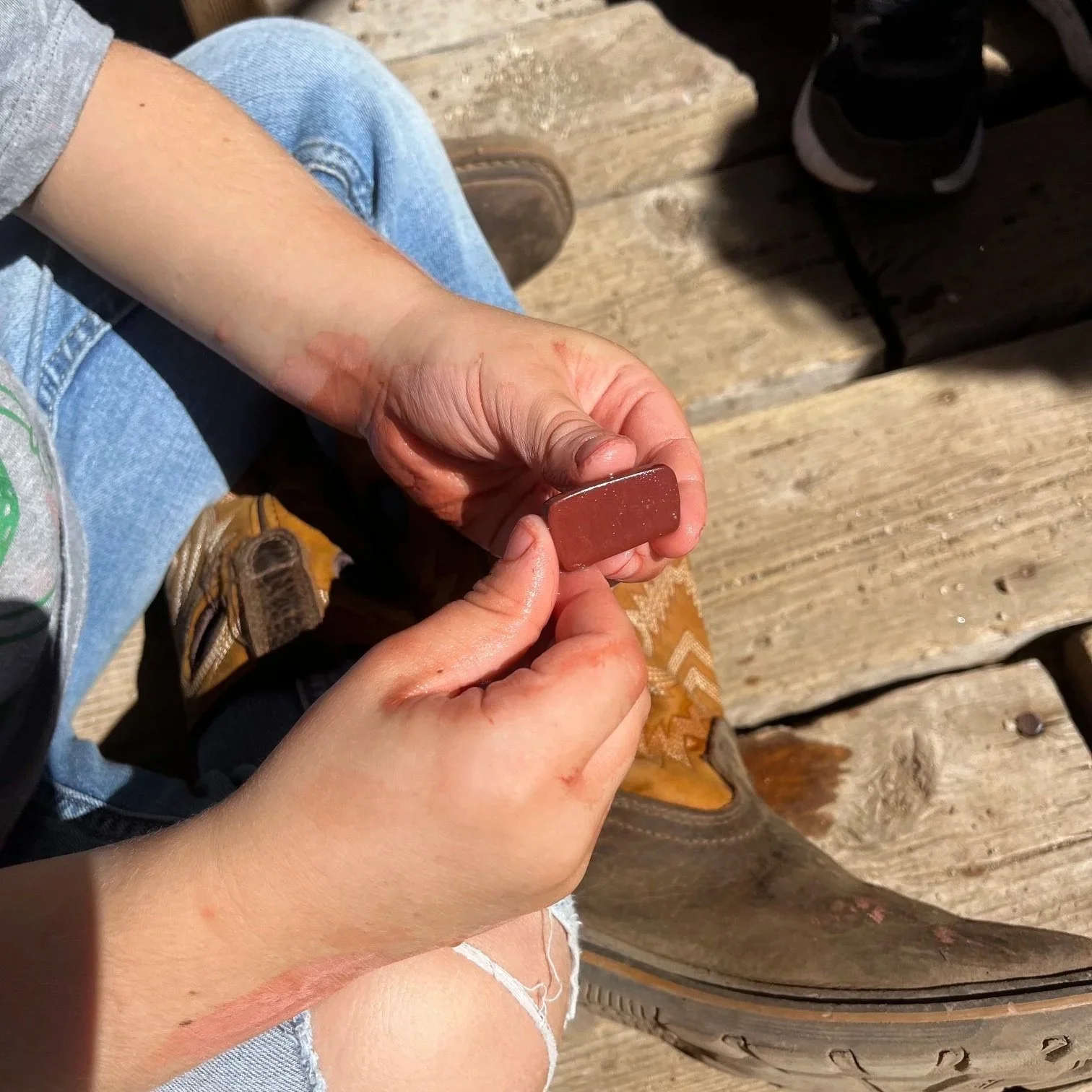
We have built a station where children can polish soapstone, pipestone and picture stone into small pendants. It is unlikely that many of our students will grow up needing to know how to make a jewelry-quality stone pendant.
That’s not really why we do it.
Polishing a stone requires controlled movement, sequencing, fine-motor coordination, patience and sustained attention. The child discovers that different abrasives affect a material differently. A rough surface can gradually become smooth. Scratches can be removed, but doing so takes time. Moving too quickly through the process affects the final result.
The work can become repetitive. Hands can get tired. Progress isn’t always immediate.
And yet we routinely see children become deeply focused on the process.
They aren’t necessarily continuing because every moment is “fun.”
Credit: Daniel Olsen
They continue because they are making something.
There is purpose behind the effort.
And that distinction matters.
Purpose gives children a reason to persist
Young children don’t need everything they do to be entertaining.
When an activity has an understandable purpose, children can demonstrate remarkable concentration and persistence—even when the work becomes difficult, repetitive or frustrating.
A child polishing a pendant wants to see the finished stone.
A child harvesting sunflower seeds knows those seeds are being collected for something.
A child filling an animal’s water knows that an animal needs to drink.
Purpose changes the child’s relationship with difficulty.
Rather than artificially creating challenges to “teach resilience,” meaningful work naturally presents manageable problems. Something doesn’t work the first time. A task takes longer than expected. Hands become tired. A mistake needs to be corrected.
The child has a reason to keep going.
Repeated experiences like these allow children to discover something far more important than how to polish a stone:
Difficulty doesn’t necessarily mean I should stop.
Eventually, perhaps:
I can do difficult things.
Giving future knowledge somewhere to land
There is another reason we value these experiences.
We think of them as creating anchor points.
Pottery has long had a place in Montessori education. At Starry Garden, children may also participate in processing wild clay into material that can actually be used to make pottery.
A young child doesn’t need a lecture on material science while doing this. They can simply experience the material.
They discover that earth can contain usable clay. They see unwanted material separated from useful material. They experience mixtures and proportions. They add water and watch consistency change. Eventually, something gathered from the ground can become a finished object.
Years later, formal concepts can attach themselves to those experiences.
Geology. Ratios. Chemistry. Material science. History. Human technology.
The terminology can come later.
Experience can precede explanation.
When children eventually encounter an abstract idea, sometimes there is already something in their lived experience for that idea to attach itself to.
Credit: Rachel Olsen
Following a sunflower through the seasons
Sometimes these experiences unfold over months rather than minutes.
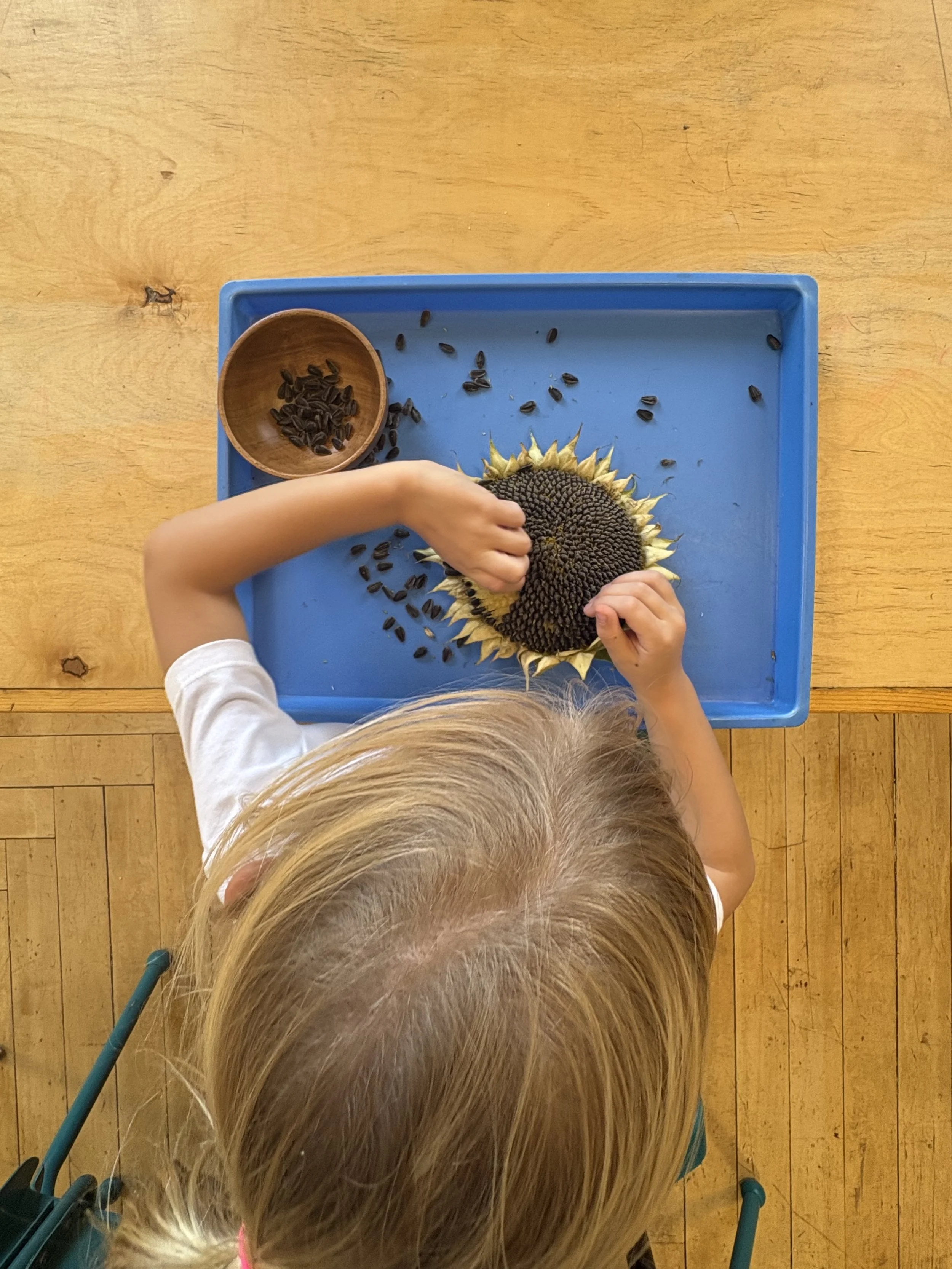
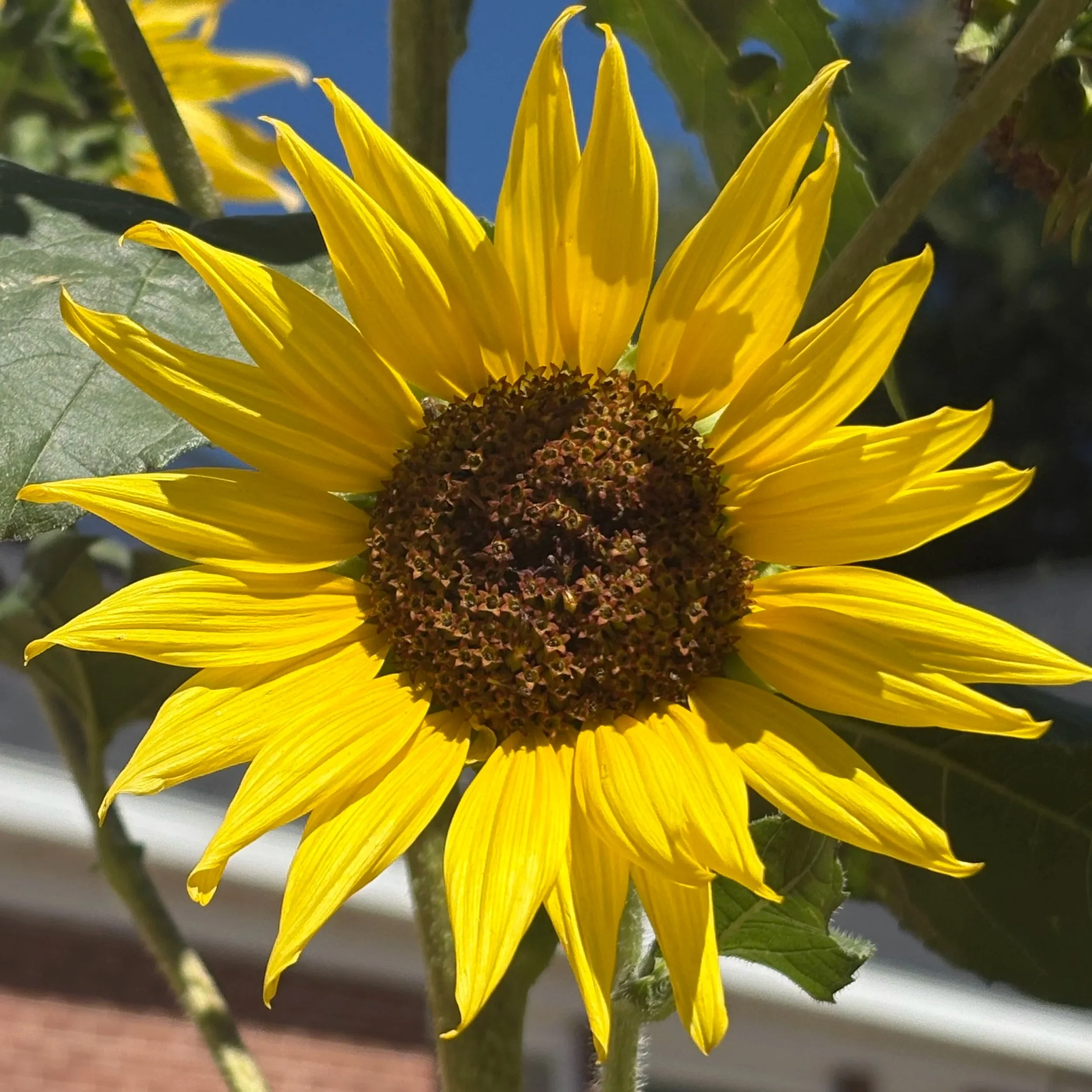
Our children grow sunflowers. Eventually those flowers mature and dry. Children remove the seeds and collect them in containers. The seeds can then be divided into packets to share with Starry Garden families or saved to plant again in the spring.
There are dozens of concepts hidden inside that simple experience: plant biology, reproduction, seasons, counting, sorting, fine-motor control, food systems, cycles and delayed gratification.
But we don’t need to turn every experience into a formal lesson.
Sometimes it is enough for a child to hold a sunflower seed in their hand in the fall and then push that same kind of seed into the earth the following spring.
Years of future knowledge now have somewhere to land.
Caring for something beyond ourselves
Plants and animals add another important dimension to Practical Life.
Starry Garden children regularly participate in caring for living things.
A polishing project can wait until tomorrow.
A chicken needs food and water today.
Living things respond to our actions. Plants wilt. Seeds germinate. Gardens change with the weather. Animals communicate their needs through their behavior.
Children begin to recognize that their actions can affect something outside themselves.
Practical Life therefore isn’t only about independence—learning to do things for ourselves.
It can also introduce children to interdependence—learning that capable people can contribute to the lives of others and to the community around them.
The environment changes with the seasons
The world itself provides an ever-changing curriculum.
In spring, children can plant.
During the growing season, they can care for the garden.
Later, they can harvest what has grown.
They can save seeds for another year.
When conditions are right, we can tap the box elder trees growing on our property and experience the process through which tree sap can eventually become syrup.
Special building projects are broken into tasks appropriate to children’s developmental abilities so that small hands can participate in real construction and making.
The objective isn’t to pretend children are adults.
Quite the opposite.
Our job is to look carefully at meaningful work and ask:
What part of this can a child genuinely do?
Then we provide the tools, environment, instruction and time necessary to let them do it.
Credit: Rachel Olsen
Reality is a remarkable teacher
There is something special about working with real materials toward real outcomes.
Stone has properties that don’t change because we want them to.
Clay behaves according to its composition and moisture.
Plants grow according to biological processes.
A board has actual dimensions.
Weather affects what can happen outside.
Animals have needs independent of our own.
The child acts upon the world, and the world answers back.
That feedback provides opportunities for observation, adaptation and problem-solving that are difficult to manufacture artificially.
It also gives children something increasingly rare: the experience of being genuinely useful.
A child’s work might produce a pendant someone wears, food someone eats, seeds another family plants, a cared-for animal, a harvested vegetable, or a small contribution to a larger building project.
The message isn’t:
“Someday, when you’re bigger, you can do important things.”
It is:
“There are important things you are capable of doing right now.”
Credit: Daniel Olsen